Class 11 chemistry ch 13
Class 11 chemistry chapter 13
Chapter 13 Hydrocarbon: Some Basic Principles and Techniques
Hydrocarbon chemistry : Some Basic Principles and Techniques Notes

Chapter 13 Hydrocarbon
Hydrocarbon Class 11 Formulas & Notes
Download in Free PDF
➣ Hydrocarbons are composed of Carbon and hydrogen.
➣ The important fuels like Petrol, kerosene, coal gas, CNG, LPG etc. are all hydrocarbons or their mixture. Sources:
Petroleum and natural gas are the major sources of aliphatic hydrocarbon while coal is an important source of aromatic hydrocarbons. The oil trapped inside the rocks is known as petroleum. PETRA – ROCK, OLEUM – OIL. The oil in the petroleum field is covered with a gaseous mixture known as natural gas. The main constituents of the natural gas are methane, ethane, propane and butane.
Petroleum and natural gas are the major sources of aliphatic hydrocarbon while coal is an important source of aromatic hydrocarbons. The oil trapped inside the rocks is known as petroleum. PETRA – ROCK, OLEUM – OIL. The oil in the petroleum field is covered with a gaseous mixture known as natural gas. The main constituents of the natural gas are methane, ethane, propane and butane.
CLASSIFICATION OF HYDROCARBONS: HYDROCARBON
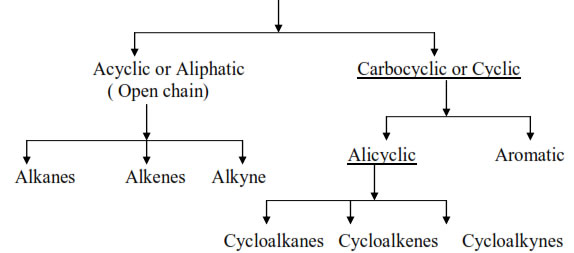
Cycloalkanes Cycloalkenes Cycloalkynes C–C bond
➣ Chemically unreactive
➣ Show chain, position and optical isomerism.
➣ Heptane has 9 isomer, Octane 18 and Decane 75. Nomenclature:
➣ Chemically unreactive
➣ Show chain, position and optical isomerism.
➣ Heptane has 9 isomer, Octane 18 and Decane 75. Nomenclature:


➣ | Follow mainly free radical mechanism | |||
➣ ➣ | Useful in preparing even number of carbon atoms Stepping up reaction | an | alkane | containing |
Frankland reaction

.jpg)

4. From carboxylic acids :- Decarboxylation

Hydrocarbons are the organic compounds containing carbon and hydrogen only, e.g., alkane, alkene and alkynes.
Physical properties: -
(1) Nature. - No load due to the covalent nature of the C-C և C-H bond. Bonds energy C-C = 83 kcal / mol էներգ bond energy C-H = 99 kcal / mol. C1 - C4 = gas, C5 - C17 = colorless odor liquid և> C17 = solid.
(2) Solubility. - Because it solves like Viz, the bond compounds dissolve in the bond solvent, and the non-bond compounds dissolve in the non-bond solution.
(3) Boiling point. - boiling point boiling point due to non-polar nature Molecules are stored only by the weak forces of Van der Waals.
Because we know that the magnitude of Van der Waals' forces is directly proportional to the molecular size. As a result, the boiling point increases with increasing molecular weight, that is, with the increasing number of carbon atoms.
Note: - The boiling points of branched chain alkanes are lower than those of direct chain isomers.
This is due to the fact that the branch of the chain makes the molecule more compact, thus reducing the surface air, and, consequently, the amplitude of the forces of Van der Waals.
And:
n-penatne (fixing point = 309k
And:
isopanta attachment point = 301 k
And:
neopentane bulting point = 280.5 k:
Regular variations with a number of carbon atoms with more melting point lkanes 2O2 CO2 2H2O having immediately odd amounts of carbon atoms immediately lower և immediately higher.
Chemical properties:
And:
Please note. - Iodization is the opposite reaction. It is then carried out by heating the alkali in the presence of an oxidizing agent, iodine (HIO3) or nitric acid (HNO3) or mercury oxide (HgO), which oxidizes the HI formed during the reaction.
And:
Note: - Alkan fluoridation occurs explosively, even causing C-C bond spoilage in higher alkalis.
Halogenation characteristics. -
(i) the reactivity of halogens. - F2> Cl2> Br2> I2.
(ii) The hydrogen replacement rate of alkanes is: - 3 °> 2 °> 1 °
And:
Mechanism. - The halogenation reaction takes place by a radical mechanism. The reaction takes place according to the following stages: Initiative:
i) stage of chain start;
And:
(ii) chain distribution phase.
And:
(iii) Chain termination phase.
And:
Nitration.
• The reaction takes place through a free radical mechanism at high temperatures (450: C).
• At high temperatures, the C-C bond is also broken to obtain a nitrogen mixture.
And:
And:
And:
And:
And:
And:
This method is also called dehydration or hydrophoresis
Similarly, heptane gives toluene, n-octane gives o-xylene և 2, methylhepan gives m-xylene.
Dec mal venous decomposition or pyrolysis or rupture or fragmentation. - When higher alkanes are heated to high temperatures (about 700-800k) in the presence of aluminum or silicate catalysts, the alkanes decompose into lower alkanes and alkenes.
CH3-CH2-CH3  CH3-CH-CH2 + CH3-CH3 + C2H4 + CH4
Ap Steam operation. - Catalyst: nickel, aluminum Al2O3 1000 oC CH4 + H2O (vapor)  CO + 3H2
This reaction is used for the industrial preparation of hydrogen from natural gas.
8. Izomerization:
And:
ORGANIZATION ISOMERISM.
Classification of Hydrocarbons
Alkanes
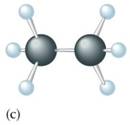
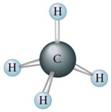
Alkanes are saturated, open chain hydrocarbons containing carbon-carbon single bonds. e.g., methane (CH4), ethane (C4H6) propane (C3H8), etc.
These hydrocarbons are inert under normal conditions [i.e.,do not react with acids. bases and other reagents). Hence, they were earlier known 88 paraffins (Latin : parum-little; affins-affinity)
Alkanes exhibit chain isomensm, position isomerism and conformational isomerism.
Methods of Preparation of Alkanes
i) From hydrogenation of alkenes and alkynes
Ease of hydrogenation depends on the steric crowding across the multiple bond. More is the steric crowding, the less is the
reactivity towards hydrogenation.
(ii) By sodalime Decarboxylation of sodium or potassium salts of fatty acids [decarboxylation reaction]
This reaction is used for descending of series as the alkane obtained has one carbon less than the parent compound. CaO is
more hygroscopic than NaOH and it keeps NaOH in dry state.
(iii) By Wurtz reaction
This reaction is used to increase the length of the carbon chain.
(iv) By reduction of alkyl halides
Reducing agents like Zn/HCl, HI/Red P, H2/Pd can also be used.
(v) By Kolbe’s electrolysis
Only alkanes with even number of carbon atoms can be formed.
Alkane and CO2 are liberated at anode while H2 is liberated at cathode.
(vi) Clemmensen’s reduction
(vii) From compounds containing oxygen Alcohols, aldehydes ketones, carboxylic acids and their derivatives give alkane when treated with hot conc HI and red P in a sealed tube.
(viii) Wolff-Kishnerts reduction
(ix) From carbides
(x) Corey-Bouse synthesis This method can be used to prepare alkanes having odd number of carbon atoms.
Physical Properties of Alkanes
(i) The first four members are colourless gas, next thirteen members are colourless liquids and next higher members are
colourless solids.
(It can be explained on the basis of magnitude of attraction forees.)
(ii). Boiling point of alkanes decreases on branching.
BP ∝ VAF (van der Waals’ forces)
VAF ∝ molecular mass or VAF ∝ SA (surface area)
So boiling point order can be given as
n-octane > iso-octane> 2, 2, 3, 3-tetramethyl butane
(iii). Alkanes with even number of carbon atoms have higher melting points as compared to next higher or lower alkanes with odd number of carbon atoms.
(iv). Alkanes being non-polar in nature, soluble in non-polar solvents but insoluble in polar solvent such as water.
Chemical Properties of Alkanes
(i) Halogenation of alkanes
(a) Chlorination
(b) Bromination of alkanes proceeds in the same way but not so easily.
(c) Iodination
Mechanism of halogenation of alkanes is free radical in nature, i.e., the attacking reagent is a halogen free radical (X.). It is a chain reaction.
(ii) Combustion
Due to the evolution of a large amount of heat during combustion, alkanes are used as fuels.
(iii) Controlled oxidation
(iv) Isomerisation
(v) Aromatisation
Reactions for Methane (CH4)
(Methane cannot be prepared by Wurtz reaction, Kolbe’s electrolytic process and by reduction of alkenes or alkynes).
Reactions for Ethane(C2H6)
Conformations of Alkanes
Alkanes have C-C sigma (σ) bonds and rotation about C-C single bond is allowed. This rotation results in different spatial arrangements of atoms in space which can change into one another, such spatial arrangements are called conformations or conformers or rotamers.
Conformations of ethane
(i) Sawhorse projections
(ii) Newman projections
Intermediate conformation between eclipsed and staggered are known as skew (gauche) conformations.
Eclipsed form is least stable but staggered form is most stable due to greater distance between the bond pairs or lesser torsional strain.
The energy difference between the two extreme forms is of the order of 12.5 kJ mol-1Alkenes
They are unsaturated non-cyclic hydrocarbons which have a .sp2 hybridization with a bond angle of 120 ոմ.
Alkenes are also called olefinins [oil formation], which indicates their highly reactive nature.
The alkenes have a common formula և Cn H2n, where n = 2,3,4…
C2H4 (ethene), C3H6 (propene), etc.
Methods of making alkenes
(i) from aIkynes
Physical properties of alkenes
Alkenes, as a class, are similar in their physical properties to alkanes, except for the types of isomerism and the difference in polar nature.
C1 to C3 are gases, the next fourteen are liquids and the upper limbs are solids.
The alkenes show a steady increase in the boiling point with increasing size.
Isomerism in Alkenes
Alken presents both a structural isomerism and a geometric isomerism.
The structural isomerism shown by the alkenes is chain isomerism and positional isomerism.
Alkenes also describes stereoisomerism as a geometric (cis-trans) isomerization.
Isomerism in Alkenes
Chemical properties of alkenes
(i) addition of halogens
(ii) Add hydrogen halides HCI, HBr, HI Add alkenes to form alkyl halides according to their reactivity.
HI> HBr> HCI:
Additional reaction of HBr to polymetric alkenes (Markownikoff rule) According to the Markownikofrs rule, the negative part of the supplement (addition of a molecule) is attached to this carbon atom, which has a smaller amount of hydrogen atom.
Anti-Markownikoff supplement or peroxide effect or boiling effect In the presence of organic peroxide, the addition of only the Hymr molecule to the non-HBr molecule on the non-metric alkene occurs in violation of the Markownikoffs rule.
(v) Oxymercuration-demercuration This reaction is an example of alkaline hydration according to the Markownikoffs rule.
It's an anti-aircraft reaction.
It's better than catalytic hydration with a tendon. H2SO4 because it avoids rearrangements.
(vi) oxidation of biodegradation
This reaction included a synthetic additive to the reagent.
(vii) Oxidation The alkenes degrade the aqueous solution of potassium permanganate (Bayer's reagent). It is used as a deficiency test.
KMnO4 acids or K2Cr2O7 acids oxidizing alkenes to ketones և / or acids depending on the nature of the alkene: experimental conditions.
(viii) ozonoliz
(ix) Polymerization
(x) Reaction with sulfur monochloride
(xii) Diels-Alder reaction
(xiii) Replacement reactions They occur at very high temperatures in the allyl position
Reactions to ethylene [ethylene] (C2 H4)
Regarding Dienes:
Simple alternative (-) և Double bonds (=) Alternative dienes are called conjugated alkenes. They give Diels, Alder's answer.
Alkynes
These are unsaturated carbohydrates with a total formula of CnH2n - 2, for example, C2H2 (ethine), C3H4 (propyne)
The alkynes also react with an electrolytic additive, but are less reactive than the alkenes because the separation of the electron cloud x requires more energy.
The position of the triple bond in the alkynes is determined by ozone (O3).
H - C = C - H contains 3σ և 2π - bonds, length of bonds - 120 in the evening. Made of acetylene. The angle of the connection H - C - C is 180 :.
Methods of making alkynes
(i) calcium carbide
(ii) adjacent dialysis
(iii) from tetrahalides
Physical properties of alkynes
1. Two members of the rust are gases, the next eight members (C5 - C12) are liquids and the upper members are solid substances.
2. They are all colorless and odorless, with the exception of acetylene, which has a slight garlic odor due to the presence of PH3 and H2S as dirt.
3. Alkynes are insoluble in water, but soluble in organic solutions such as ethers, carbon tetrachloride and gasoline.
4. Melting point, boiling point: the density increases with increasing molar mass.
Chemical properties of alkynes
The alkynes exhibit electrophilic and nucleophilic addition reactions.
(i) the acid property of alkyne
These reactions are not represented by alkenes, alkanes and non-terminal alkynes, they are therefore used to distinguish between alkanes, alkenes and alkynes.
Acetylene hydrogen is acidic due to the nature of 50% of the sphybridised orbitals.
Acidity of alkynes is lesser than water.
Acidic behaviour order
(ii) Electrophilic addition reactions
The addition product formed depends upon the stability of vinylic cation. Addition on unsymmetrical alkynes takes place according to Markovnikov’s rule.
(a) Addition of dihydrogen
(b) Addition of halogens
(c) Addition of hydrogen halides
(d) Addition of water
(iii) Cyclic polymerisation
(iv) Reaction with AsCl3 (arsenic trichloride)
(v) Oxidation
Ozonolysis
Higher alkynes give diketones which are further oxidised to carboxylic acid.
(vi) Linear polymerization
Reactions for Acetylene (C2 H2)
Benzene
The parent member of the family of aromatic hydrocarbons is benzene (molecular formula: CJls). It has hexagonal ring of six carbon atoms with three double bonds at alternate positions. It is resonance stabilised and the structure may be represented as given ahead.
Methods of Preparation
(i) Cyclic polymerisation of ethyne See alkyne
(ii) Decarboxylation of aromatic acids
Physical Properties of Benzene
Aromatic hydrocarbons are non-polar molecules and are usually colourless liquids or solids with a characteristic aroma.
Aromatic hydrocarbons are immiscible with water but readily miscible with organic solvents.
Aromatic compounds burn with sooty flame.
Chemical Reactions of Benzene
Benzene gives electrophilic substitution reactions.
According to experimental evidences, electrophilic substitution reaction involve following three steps:
(a) Generation of electrophilic
(b) Formation of carbocation intermediate
(c) Removal of proton from the carbocation intermediate.
(i) Nitration
(ii) Halogenation
(iii) Sulphonation
(iv) Friedel-Craft’s alkylation reaction
When Friedel-Craft alkylation is carried out with CH3CI, the product obtained is C6H5CH3. Incase the alkylation is carried out
with higher alkyl halide, e.g., n-propyl chloride, then the electrophile n-propyl carbocation (CH3 – CH2 – +CH2) which is a
primary carbocation rearranges to form more stable secondary carbocation (iso-propyl carbocation)., and the main product formed will be iso-propyl benzene.
(v) Friedel-Crafts acylation reaction
(vi) With Cl2 In excess of chlorine, benzene yields hexachlorobenzene [C6CI6].
Benzene also undergoes addition reactions e.g.,
Combustion 2C6H6 + 15O2 → 12CO2 + 6H2O
Reactions for Benzene
Petroleum
It is a dark coloured oily liquid with offensive odour, found at various depths in many region below the earth’s surface. It is also called rock oil, mineral oil or crude oil It is covered by an atmosphere of a gaseous mixture known as natural gas.
It contains mainly alkanes, cycloalkanes, aromatic hydrocarbons, sulphur, nitrogen and oxygen compounds.
When subjected to fractional distillation, it gives different fractions at different temperatures.
LPG (Liquified Petroleum gas)
It is a mixture of butane and isobutane with a small amount of propane. A strong foul smelling substance, called ethyl mercaptan (C2H5SH) is added to LPG cylinders, to help in the detection of gas leakage.
CNG (Compressed Natural Gas)
It consists mainly of methane (95%), which is a relatively unreactive hydrocarbon and makes its nearly complete combustion possible.
Artificial Methods for Manufacturing Petrol
From higher alkanes, petrol or gasoline is obtained by cracking or pyrolysis.
From coal, petrol can be synthesised by following two processes :
(i) Bergius process
(ii) Fischer- Tropsch process
The best catalyst for this process is a mixture of Co, thoria, magnesia and kieselguhr.
The overall yield in this process is slightly higher than Bergius process.
Octane Number
The quality of petrol is expressed in terms of octane number which is defined as the percentage of iso-octane by volume in a mixture of iso-octane and n-heptane which has the same antiknock properties as the fuel under test.
The octane number is 100 for iso-octane (2, 2, 4-trimethylpentane

Comments
Post a Comment
Ask me anything here...